


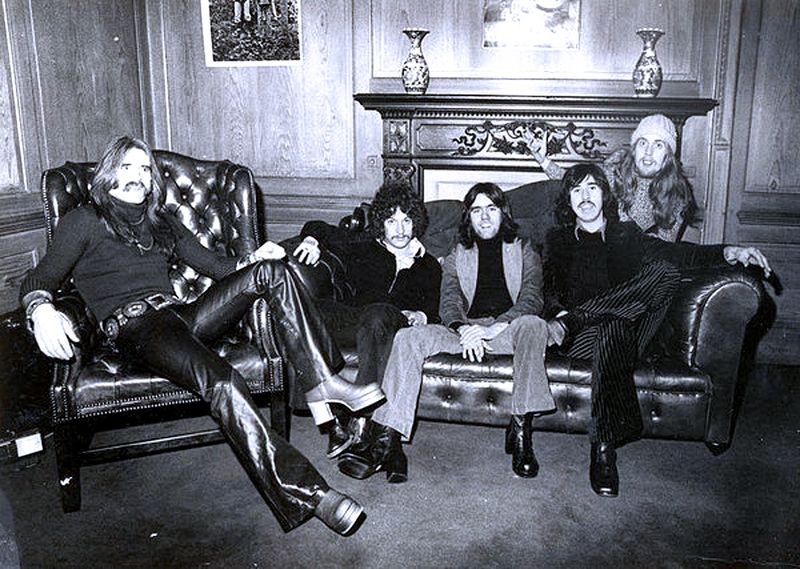
In the crowded and wildly inventive British rock scene of the 1970s, it was easy for even exceptional bands to slip through the cracks.= One such casualty of timing, trends, and tough industry luck was Snafu, a group whose blend of gritty rock, tight funk grooves, and soulful musicianship deserved far more than the cult status it holds today.
What makes Snafu’s story so compelling isn’t just the music, it’s how close they came to breaking through, and how clearly their sound anticipated directions rock music would take years later.
Origins.
Snafu formed in 1972 at a time when British rock was splintering into subgenres. Blues rock had peaked, progressive rock was becoming increasingly elaborate, and American soul and funk were beginning to exert a stronger influence across the Atlantic.
At the centre of Snafu was guitarist Micky Moody, a player with deep blues roots but an ear for groove and economy. Unlike the era’s more flamboyant guitar heroes, Moody favoured feel over flash his playing was sharp, syncopated, and always in service of the rhythm.
Fronting the band was Bobby Harrison, whose musical résumé already included a stint with Procol Harum during their early, formative days. Harrison brought a rare dual role as both drummer and lead vocalist, giving Snafu a rhythmic cohesion many bands struggled to achieve.
The lineup was rounded out by musicians who understood subtlety and space, players who didn’t overcrowd arrangements but instead locked into a collective groove. That sense of restraint would become one of Snafu’s defining characteristics.
A Sound That Sat Between Worlds.
Trying to categorize Snafu is part of the problem and the appeal. They weren’t purely a rock band, nor were they fully a funk outfit. Instead, they occupied a space somewhere between Free’s stripped-down blues rock and the rhythmic sophistication of Little Feat.
Their music leaned heavily on tight rhythm guitar interplay, rolling basslines with a distinctly funky pulse, drums that emphasized groove over bombast and vocals that carried a raw, soulful edge.
Where progressive bands stretched songs into complex suites, Snafu kept things concise. Their tracks were built around feel often mid-tempo, always deliberate, and anchored by a deep pocket that rewarded repeat listens.
There’s a case to be made that Snafu were ahead of their time. Years before funk-rock became a recognized hybrid, they were already exploring its possibilities in a distinctly British context.
Read more in the magazine…