


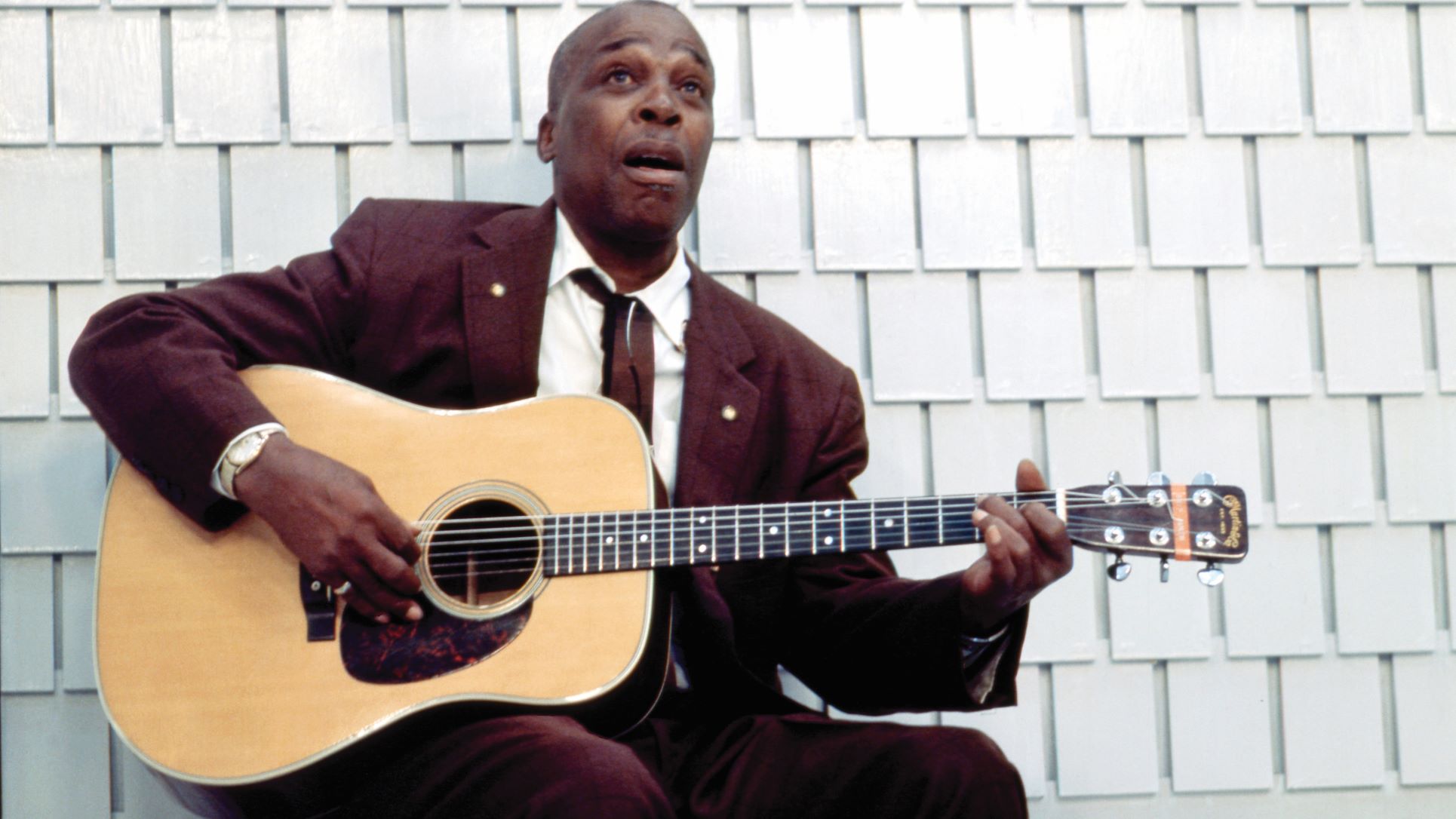
As blues music was created in many regions of the USA, the Delta was certainly not alone in producing such sounds. One of the most memorable and eccentric musicians during the early days of the blues was Skip James, who was one of the last musicians to be signed to Paramount Records before that record label went out of business.
Born in Mississippi’s Bentonia in 1902 and passing away in 1969, Skip had a unique sound that was unlike any other musician of his time due to Bentonia’s distinct location. The sound of Bentonia was rooted in a locally developed musical style that developed separately from the dance music, or what has now been dubbed as juke joint music, that was popular in other parts of the country.
While listening to the music of Skip James, it was easy to see his influence from and similarities to his talented predecessor, Blind Lemon Jefferson. Both musicians created songs that were extremely personal, introspective, and created to be listened to rather than danced to. Their lyrics were created using images of despair and darkness and were supported by sombre melodic structures that often featured both complicated guitar accompaniment and, on a few occasions, the unique style of piano that Skip was known for.
A great example of Skip’s lyrics comes from his original song “I’m So Glad,” which Eric Clapton later recorded and released with Cream. Even though Clapton’s version is quite popular, it does not even compare to the stark intensity and emotional weight of the original version recorded by Skip.
After these recording sessions were completed, Skip withdrew from recording secular blues music and transitioned to only recording spirituals. As a result, he dropped out of the public eye and fell into obscurity, as many other artists of that time did. He recorded blues music, spirituals, and original and cover songs, showcasing his ability as a versatile artist and musician.
Skip’s technique on the guitar was also unique to him and set him apart from his contemporaries. He played in a cross-note tuning based on D minor and sang with a very high falsetto voice that could raise the hair on the back of your neck. It is said that he learned this cross-note tuning from his mentor, Henry Stuckey, who was never recorded. Skip’s guitar was a 12-string Stella guitar restrung as a 6-string guitar, and this contributed to the dark sound of his music.
In 1931, Skip auditioned with record producer H.C. Spier in Jackson, MS. When Spier heard Skip sing, he was impressed and asked him to sign with Paramount Records. Skip packed up and went north to Grafton, Wisconsin, to record for Paramount. Although the artistic brilliance of Skip’s recordings was extraordinary, he did not sell well during the Great Depression and was relegated back to obscurity.
It was not until 1964, when there was a folk music and blues revival in the United States, that Skip James was rediscovered by blues enthusiasts and received a second chance at a successful music career. This allowed those who had never seen or heard Skip perform live to experience first-hand one of the most hauntingly and profoundly great voices in blues music.
The records he produced for Paramount in 1931 as follows: on 78 RPM records
A-SIDE B – SIDE
Cherry Ball Blue Hard Time Killin Floor Blues
22-20 Blues If you haven’t any Hay get on down the road
Illinois Blues Yola My Blues Away
How Long Buck Little Cow and Calf is Gonna Die Blues
Devil Got My Woman Cypress Grove Blues
I’m So Glad Special Rider Blues
Four O’clock Blues Hard Luck Child
Jesus Is A Mighty Be Ready When He Comes Good Leader
Drunken Spree What Am I To Do
James recorded several LP’s from 1964 – 1969, mostly revisiting his 1931 sides, traditional music and spirituals, but also a handful of newly written Blues written around his health problems.
By Kenny Relton